BizTalk parsing engine supports envelope schemas. This means that if the incoming message is marked as envelope schema, the parsing engine will parse the message and will dispatch the body content of the envelope as the message body part.
The most common scenario is when BizTalk receives SOAP Envelop. It's little known that Microsoft supplies soap envelope XSD schema as part of BizTalk system schemas. The schema name is BTS.soap_envelope_1__1 and is deployed inside Microsoft.BizTalk.GlobalPropertySchemas.dll under BizTalk.System BTS application.

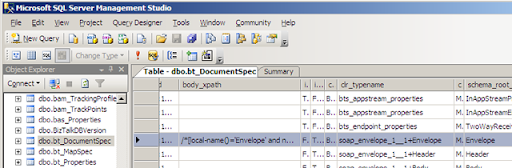
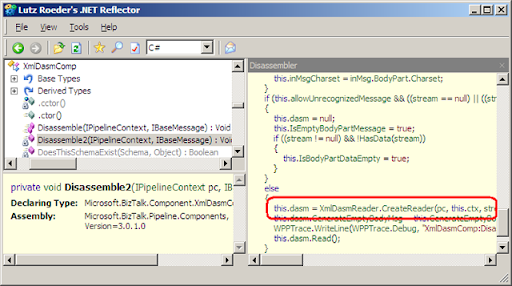
When schema is marked as Envelope (is_envelope="yes"), the engine is looking for the body_xpath annotation. This value is the actual data section and will be assigned as the message part. The value of body_xpath attribute is saved in dbo.bt_DocumentSpec table of BizTalkMgmtDb database. In the disassembling process the engine is extracting the value by using IDocumentSpec.GetBodyPath() under Microsoft.BizTalk.Component.Interop namespace.
Then the engine performing denormalize process by extracting message data from the body element. At the end of the process, BTS.MessageType context property is set to the message type of actual content of the soap:Body section.

How do I start an Orchestration with soap:envelope message type
Normally, Orchestration subscription includes value for BTS.MessageType context property, this mean you can't start orchestration with the soap envelope message type because the XmlDisassembler Component will discard the soap:Envelope content and the messaging engine will only get the soap:Body content – so at the end of the process, BTS.MessageType context property will be set to the actual message type of content under soap:Body section and the orchestration will never start with the type soap:Envelope.
In case you need to process the entire soap:Envelope inside orchestration:
- Use PassThruReceive pipeline.
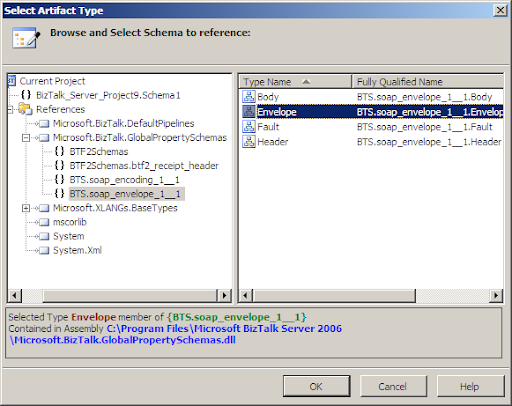
- Define message of type BTS.soap_envelope_1__1 message inside the orchestration (Message Type > schemas > from referenced assembly > Microsoft.BizTalk.GlobalPropertySchemas).
- Use Xml Document as the incoming message.
- Assign the incoming Xml Document message to the BTS.soap_envelope_1__1 message.

Which custom pipeline component I need to develop for extracting the soap:Body section
If you need to receive message that is wrapped by a soap envelope and you're using the XmlDisassembler pipeline component - there's no need to develop further components for extracting the body element because the engine will automatically dispatch the soap:Body as the message part.
What about soap:Header and soap:Fault section
The automatic dispatch is only for the soap:Body section and the other section are discarded. so if you also need to process the soap:Header section you have to write a custom pipeline component for this task.